Space Systems: FINCH
I am currently working with UTAT Space Systems on their newest satellite project: FINCH. FINCH stands for Field Imaging Nanosatellite for Crop residue Hyperspectral mapping. I have joined the FINCH team at an opportune time, where we are currently in a detailed design phase that consists of prototyping and simulations. I myself am working in the payload mechanical team, where we work to ensure that the optomechanical system of the satellite is secure and operates as intended. For more information, you can check out the Space Systems website, where you will also see some of the previous satellites UTAT has launched!
Optomechanical Payload V5 Prototype
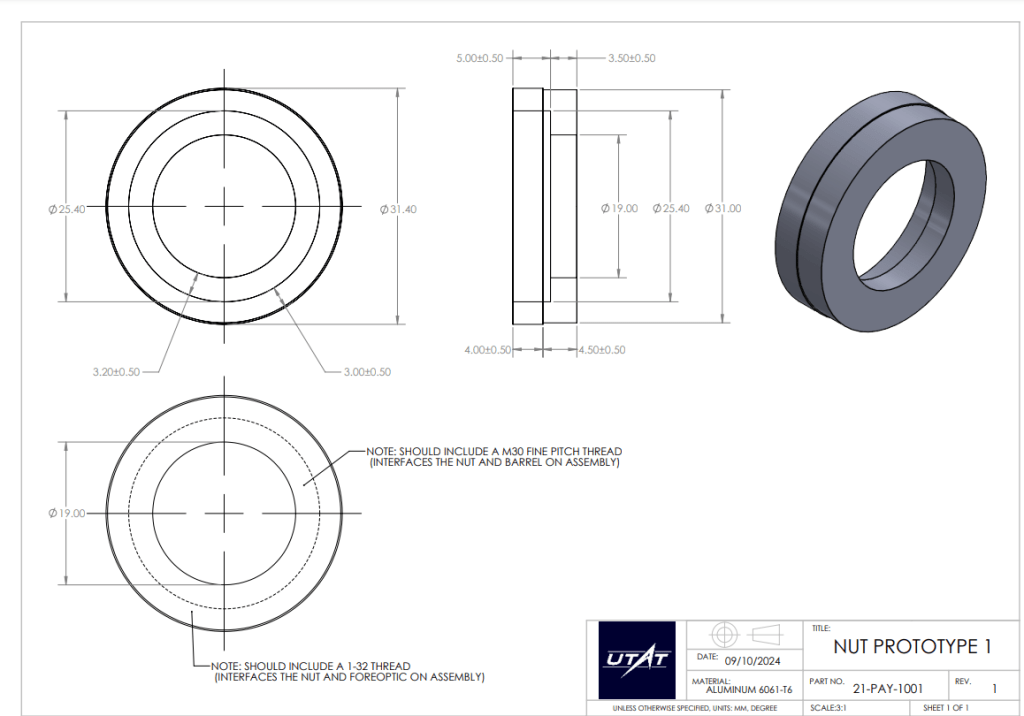
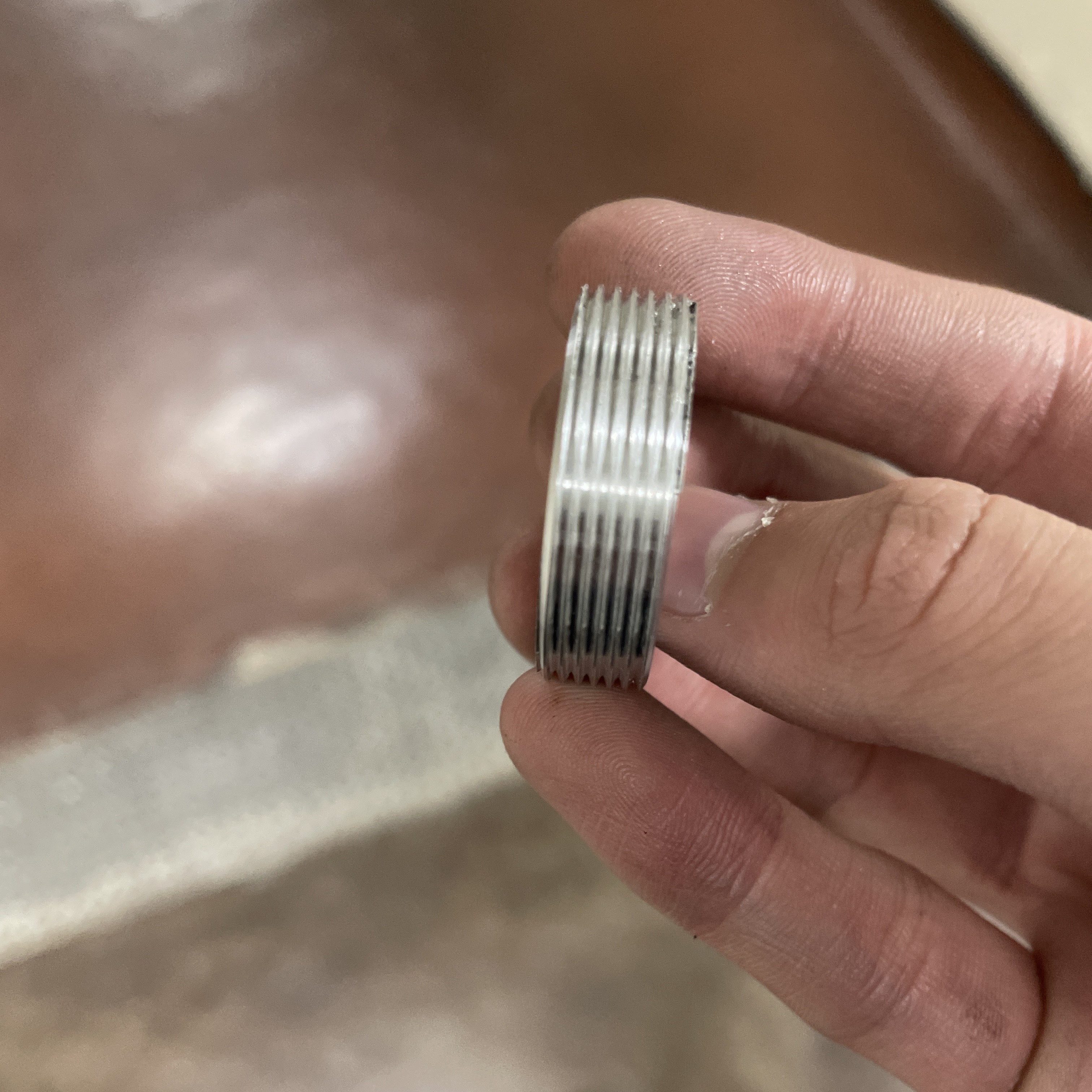
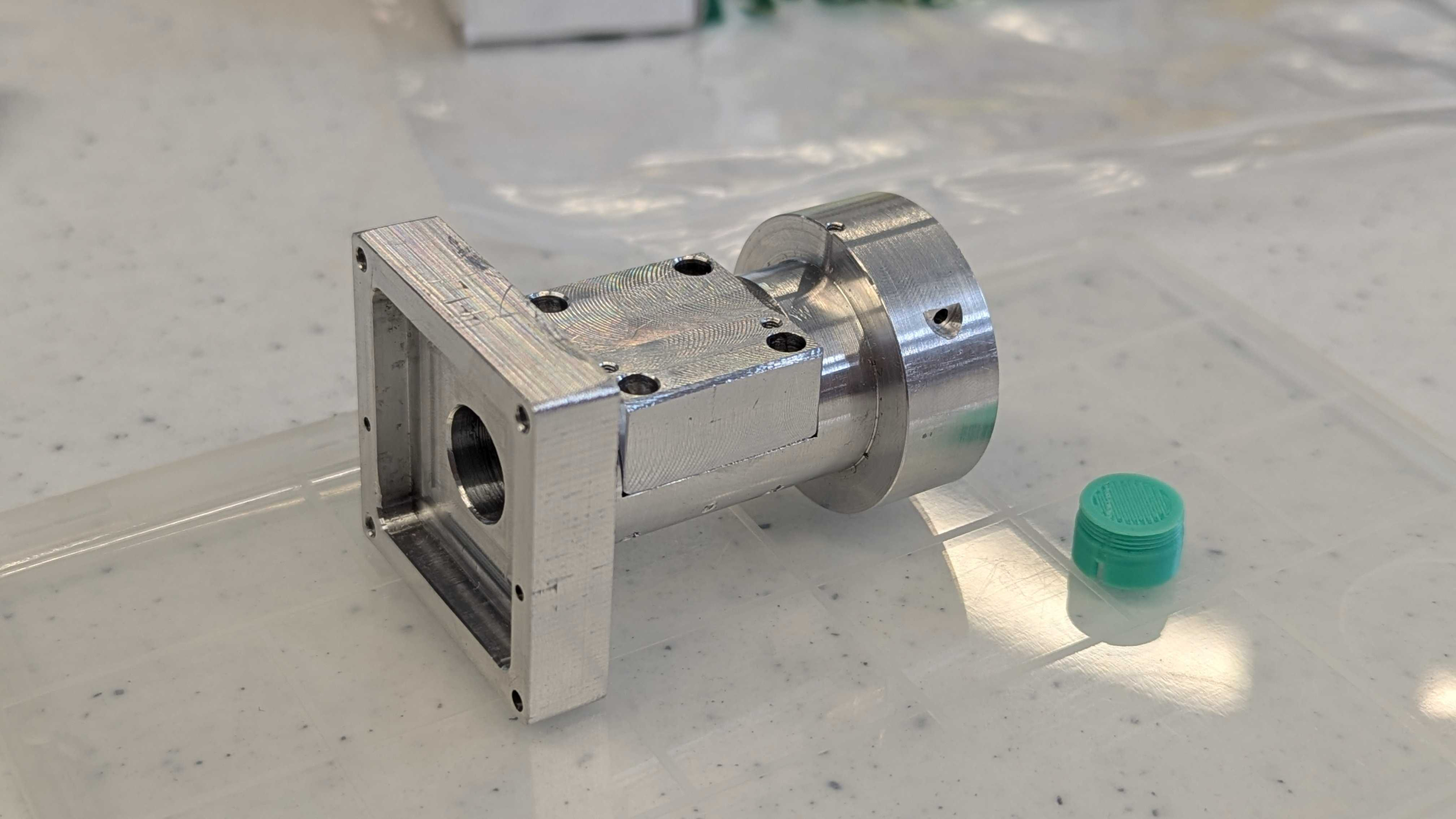
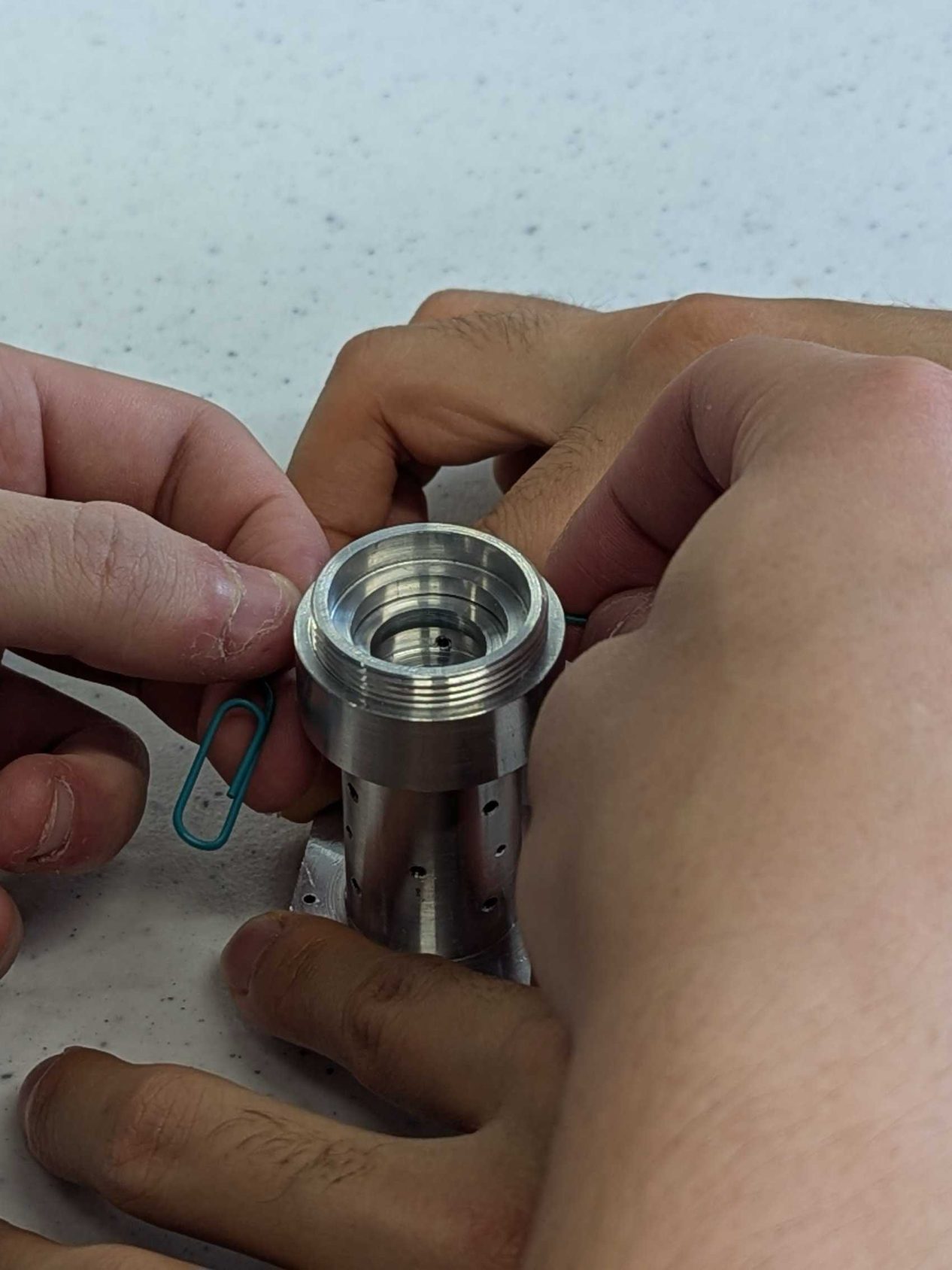
One of the first tasks I have been a part of as part of the payload mechanical team is working on the Payload V5 prototype for the optomechanical system. When I joined the team at the start of the school year, the drawings and design for this project were already pretty much complete. I got to machine a couple of the parts for this project, going into the machine shop whenever I had free time to finish working on whatever parts were required for the prototype. Working with this team is always a blast, as I get to learn a lot about aerospace and advance my skills in CAD, machining, and simulation!
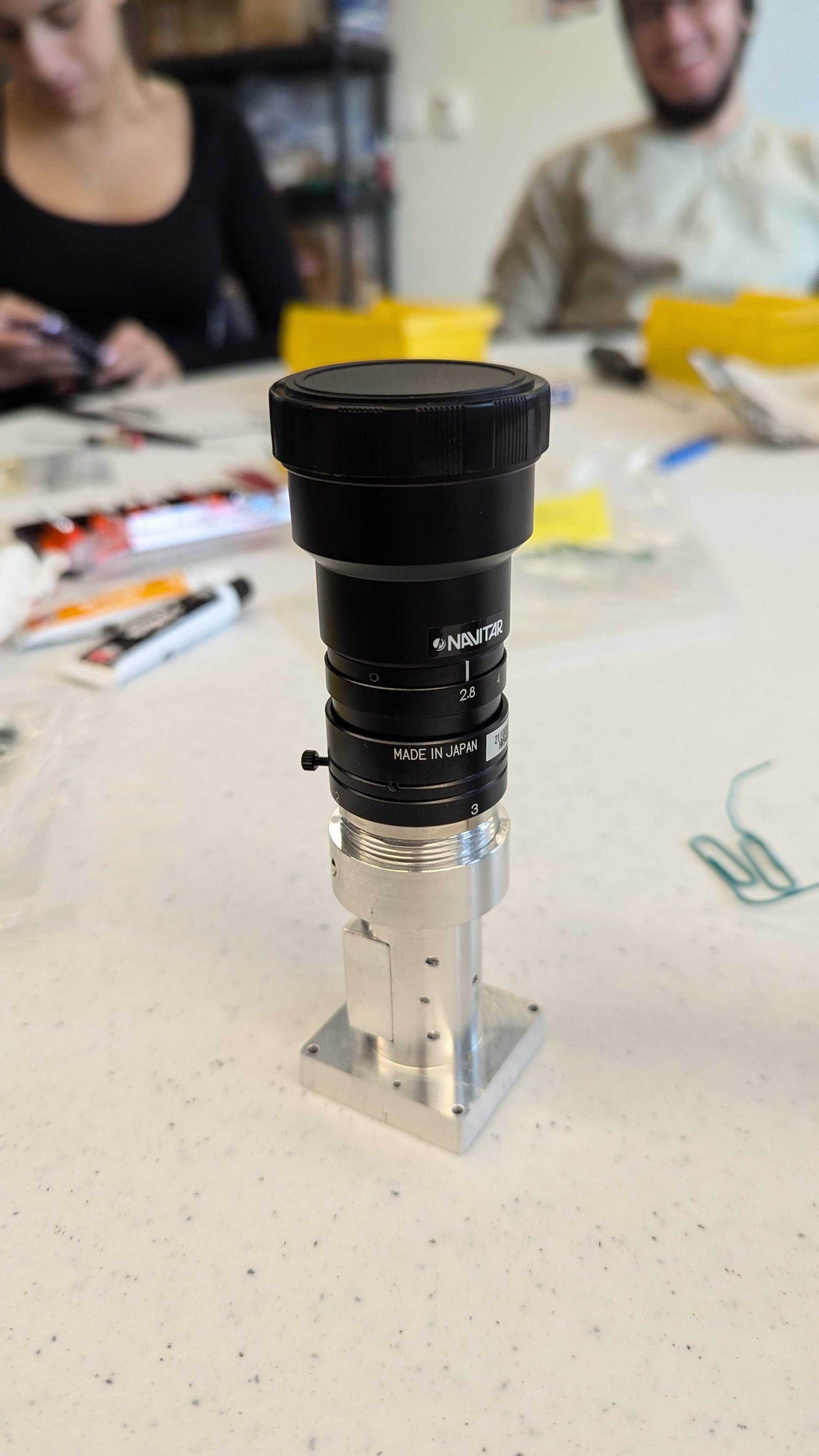
Additionally, I got to do some research on vibration damping and thermal isolation for the fore-optic mounting system. The purpose of this research is to better understand what safety precautions we must take to reduce vibrations in the fore-optic, which needs to be still to take accurate images, and to keep the fore-optic system at its operating temperature to prevent damages. Learning about the different standards and materials available to prevent vibrations was nice as it was something different from the machining and CAD work that I normally do.
Coming soon!
 Kaiser Tam