Re-imagining Space for Community Use
During my second semester at UofT, one of the courses that I took was APS112 – Engineering Strategies and Practice (ESP) II. In this team-based design course, our team worked with the Kawartha Land Trust (KLT) to improve accessibility for users with mobility challenges for a log cabin that they recently purchased in the Municipality of Dysart et. al. The knowledge I gained during this project on engineering documentation, idea generation, and collaboration can be directly applied to any field of mechanical engineering that I choose to pursue because all engineering roles will require documentation, idea generation, and collaboration. For more information about the KLT, you can check out their amazing work here, and for more information about ESP, you can check UofT’s page on ESP!
Identifying the Problem
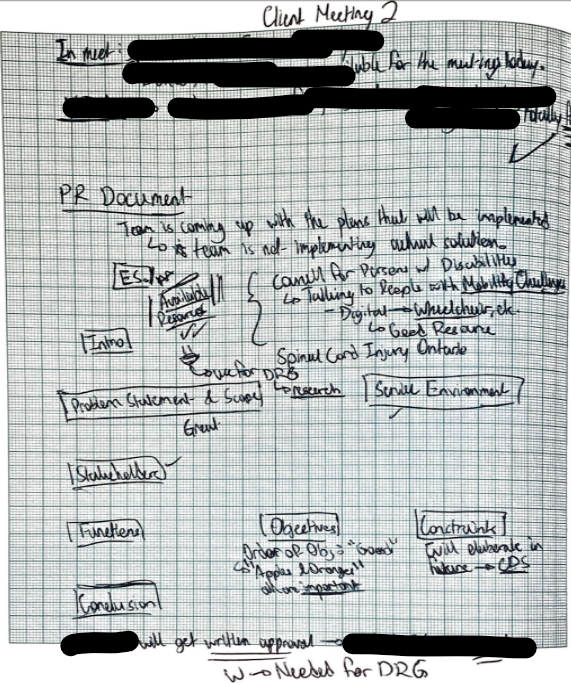
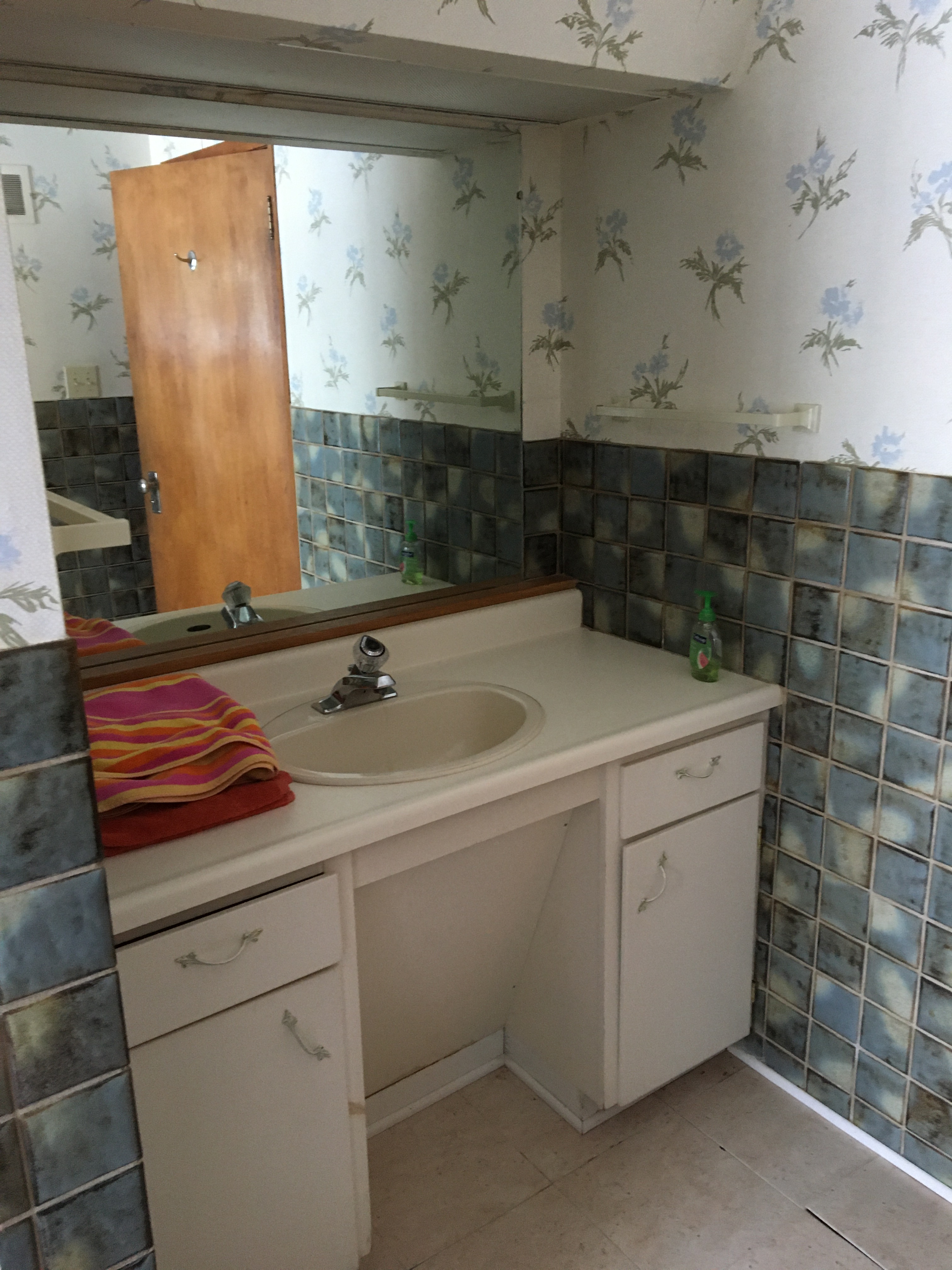
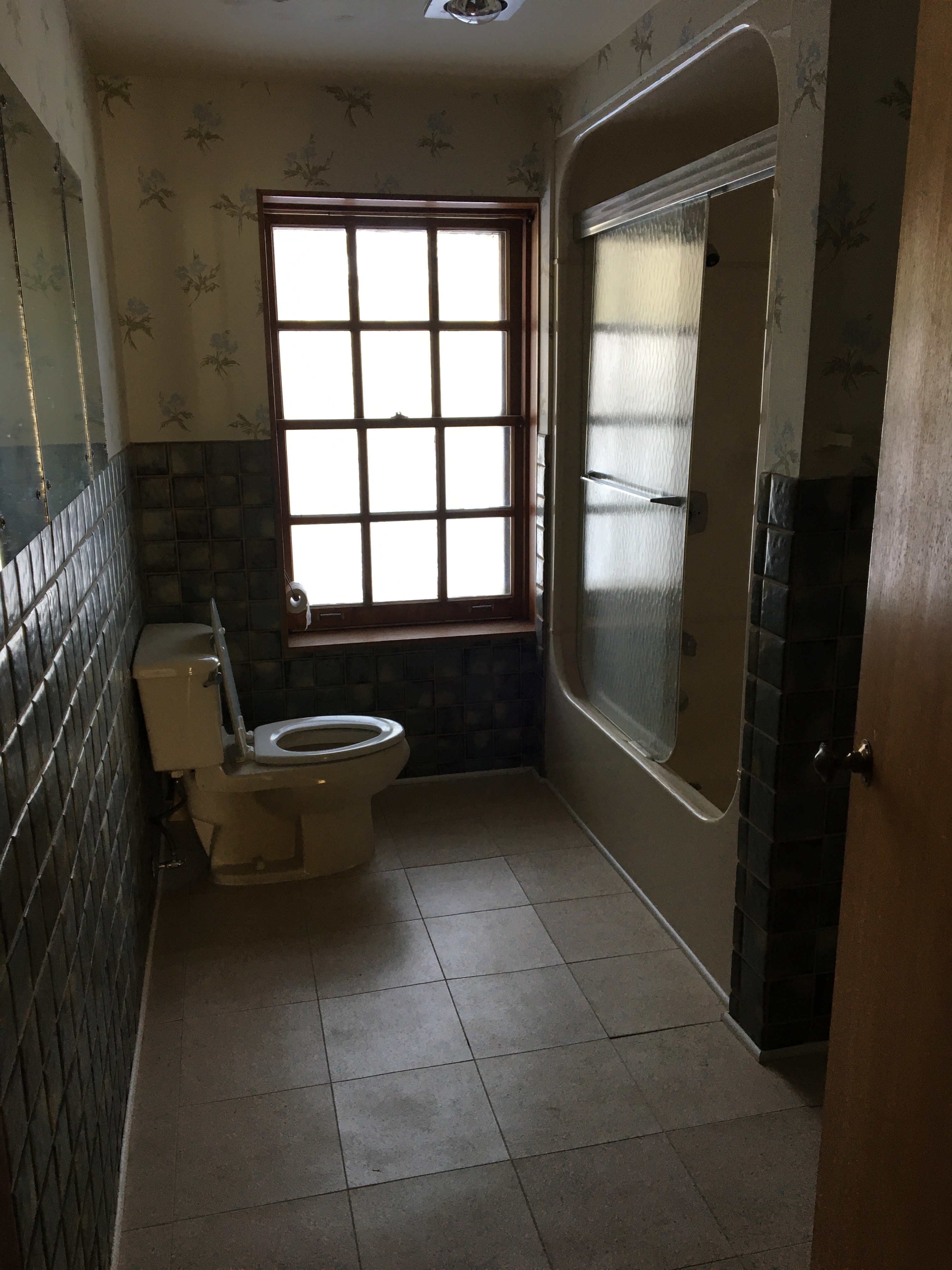
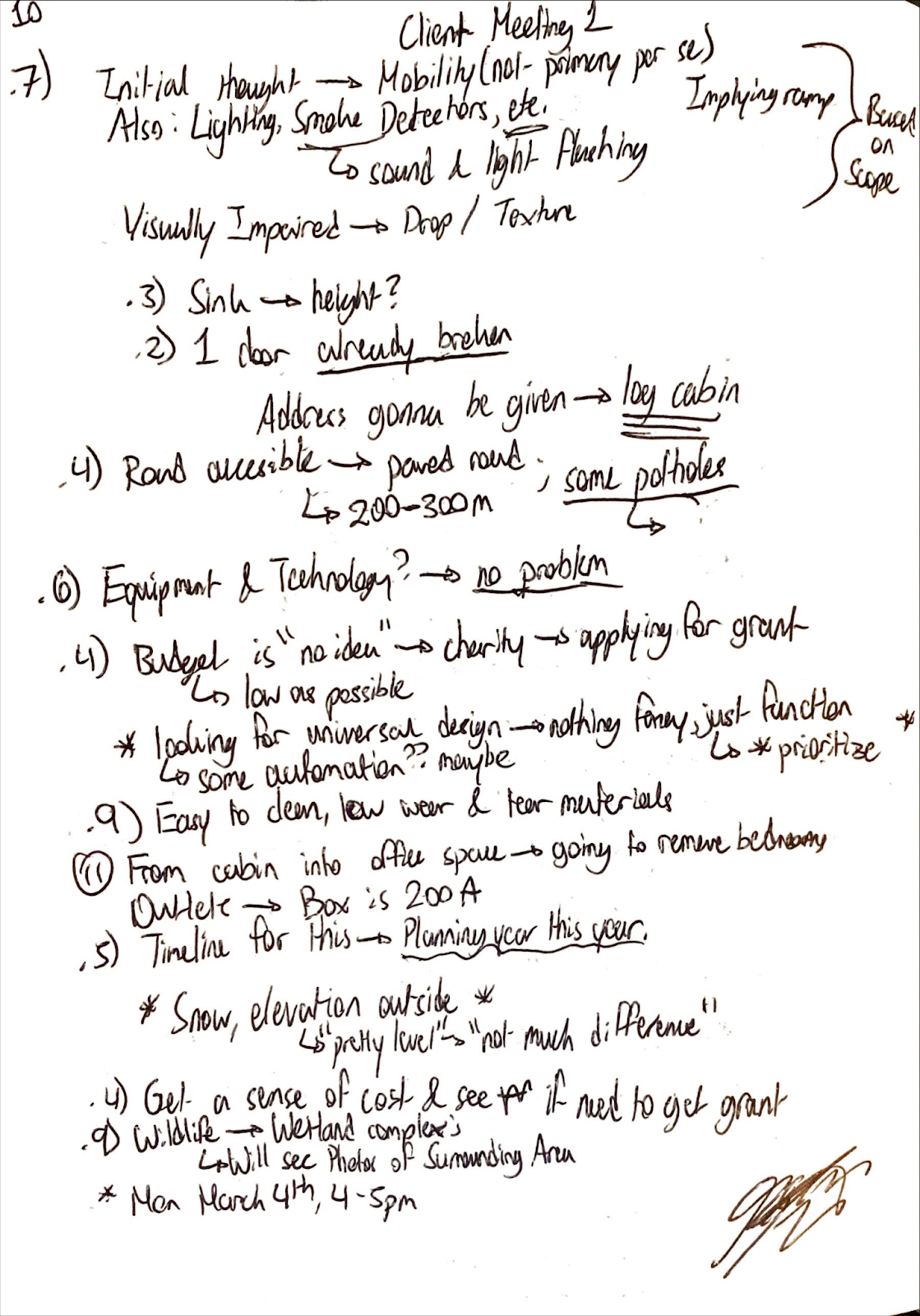
The first thing our team did (besides for introduce ourselves to each other) was define the problem at hand. When we got our client statement, we needed to translate it from plain English into a specific problem with testable metrics we can design for. This section of the project includes a lot of research, and a lot of measurements. One difficulty we faced is that our client is based our of Peterborough, whereas we are based in Toronto. This meant that we could not visit the site in-person. However, the KLT generously created a virtual blueprint so that we could examine the log cabin and create a detailed problem statement.
Design Requirements and Idea Generation
Once the team defined the problem, we then moved onto defining what potential design solutions needed to have in order to be viable solutions. Our team identified functions, objectives, and constraints for our design problem. From there, our team then moved onto idea generation by breaking down the problem into various components. We could then come up with a multitude of ideas for how to improve the design of the log cabin.
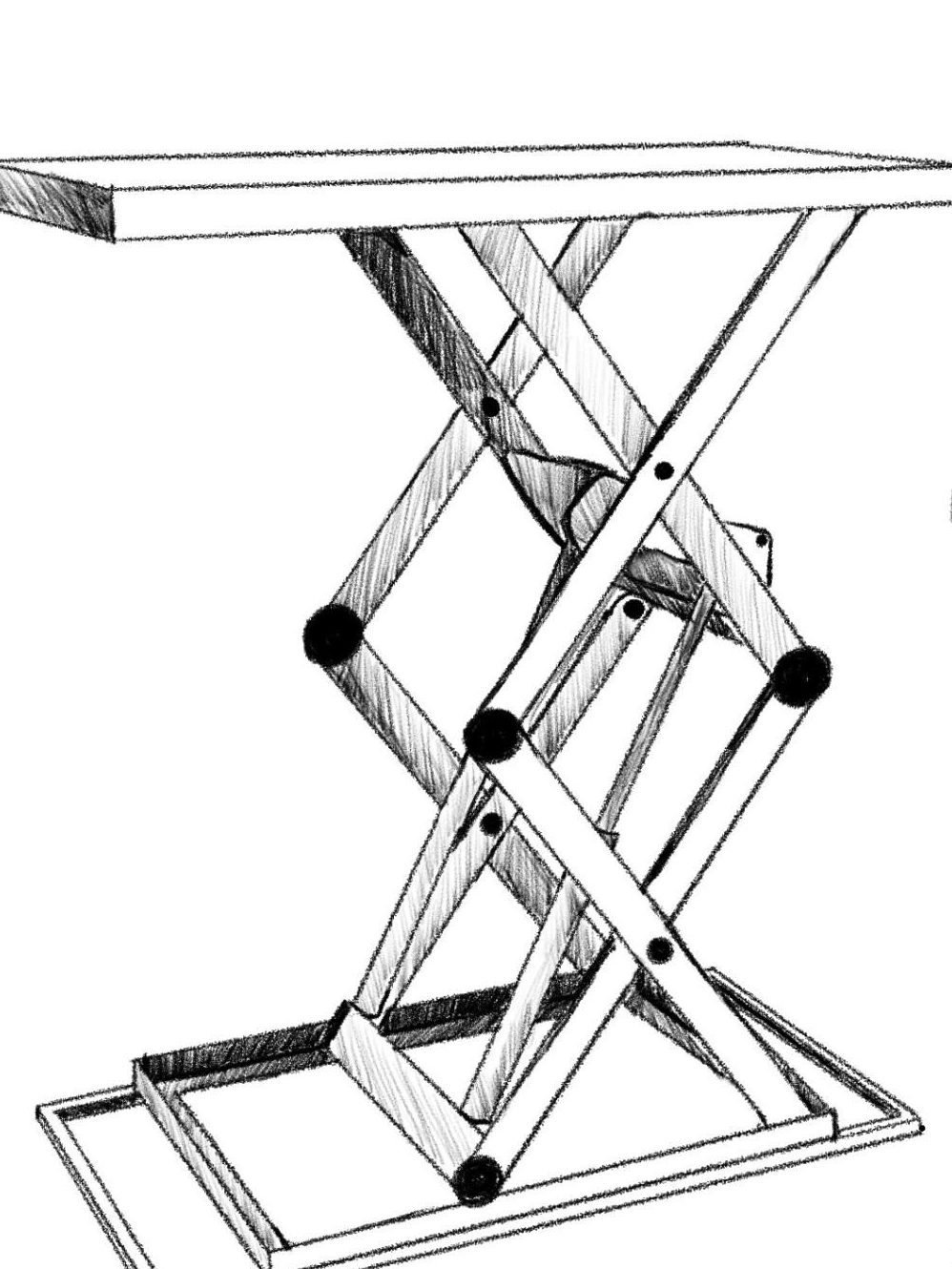
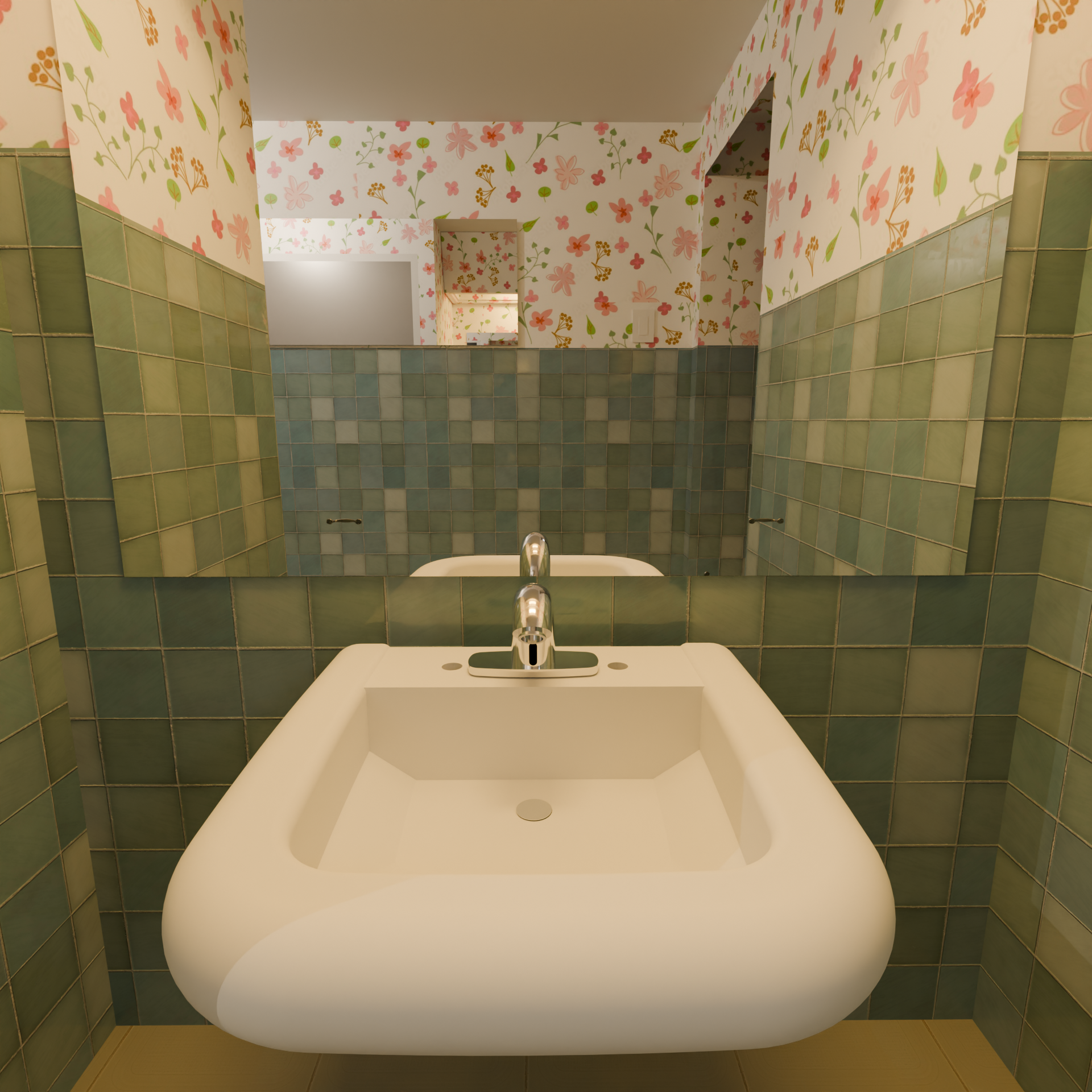
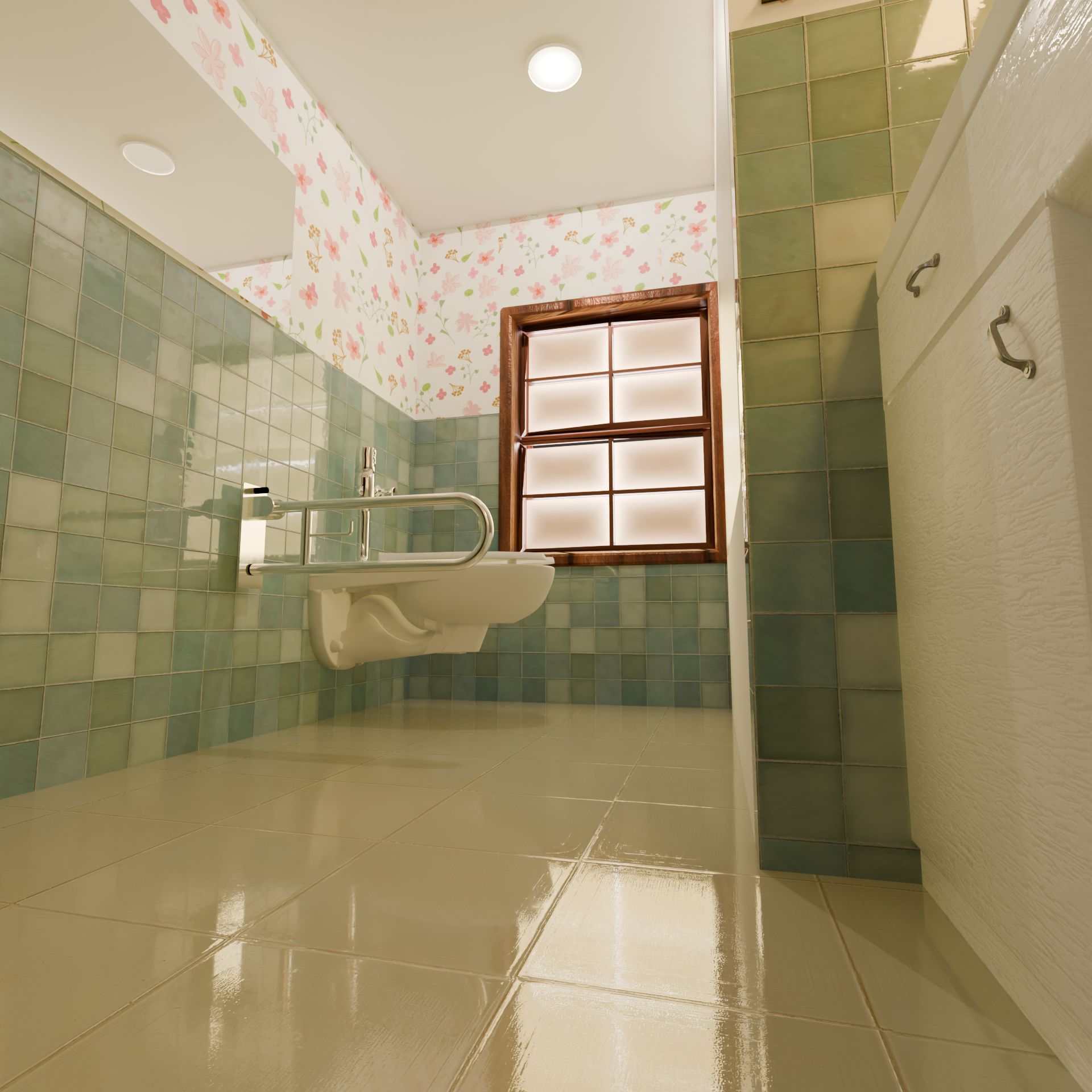
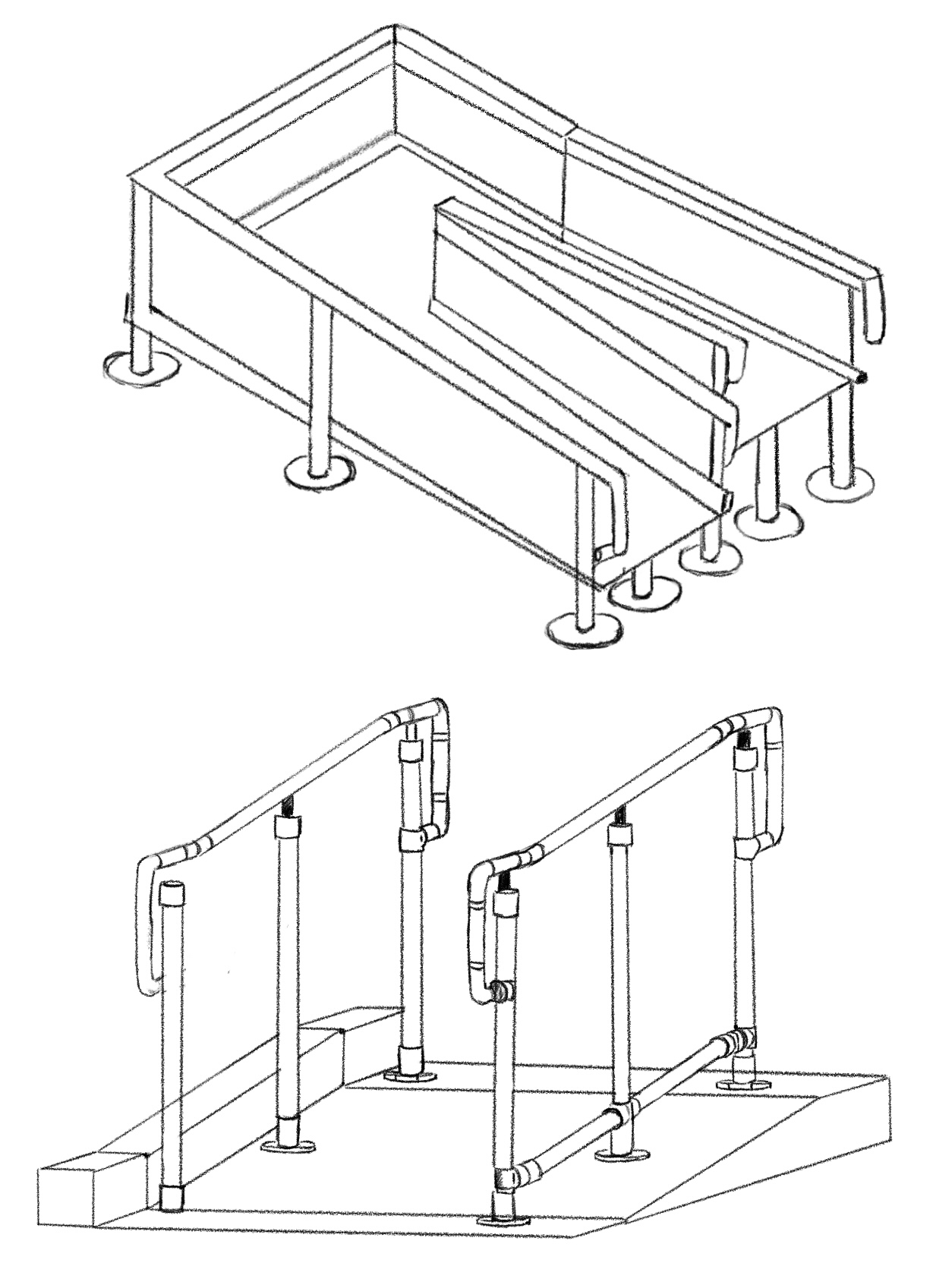
After an intensive idea selection process, we ended up with 3 design solutions. We chose one of the designs as our conceptual design solution for this project, and presented it to the client. Our client suggested some minor changes to the conceptual design solution to fit the needs of the KLT. Learning how to work with an actual client was quite enjoyable and further validated my personal belief that a career in engineering will bring me joy and satisfaction.
 Kaiser Tam